
What is Soil Vapor Extraction?
Soil Vapor Extraction is a remediation technology used to clean soil above groundwater (the vadose zone) contaminated by volatile organic compounds (VOCs) like gasoline, benzene, and degreasers/dry-cleaning solvents like tetrachloroethene (PCE) and trichloroethene (TCE).
- How it Works: Think of SVE as a high-powered vacuum system. Extraction wells are drilled into the contaminated area, and a vacuum is applied to pull air through the soil. As the air moves, it “strips” the chemical vapors away from the soil particles.
- Soil Type Matters: Air moves easily and strips contaminants from coarse sands (advection), making cleanup fast. In tight soils like clay, the contaminants move much slower, where contaminants diffuse from high concentration zones to lower concentration zones. This is why maximizing airflow, rather than just increasing vacuum, is the key to an efficient system.
- Treatment Method: The extracted soil vapor is either treated through granular activated carbon, or for vapors containing petroleum-related compounds only, burned off through a catalytic oxidizer. The treated air is then released into the atmosphere through a permit with the regional air district.
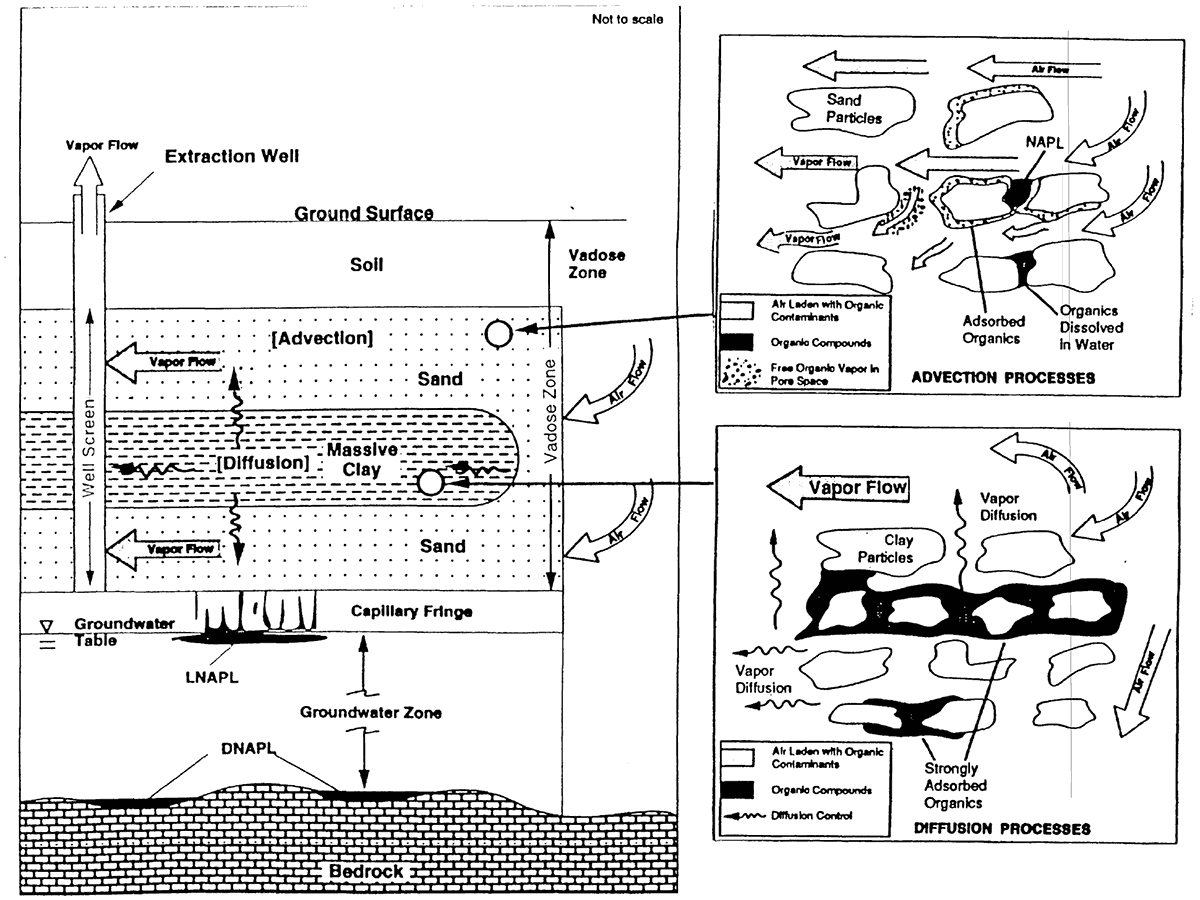
(US Army Corps of Engineers, Engineering Design, Soil Vapor Extraction and Bioventing, June 3, 2002)
Enhancing SVE with Air Sparging
To increase air flow through the contaminated zone and/or reach contamination trapped below the water table, we often pair SVE with Air Sparging. We inject clean air, often deep into the groundwater, which “bubbles” the contaminants up into the soil above, where the SVE system can then vacuum them away.
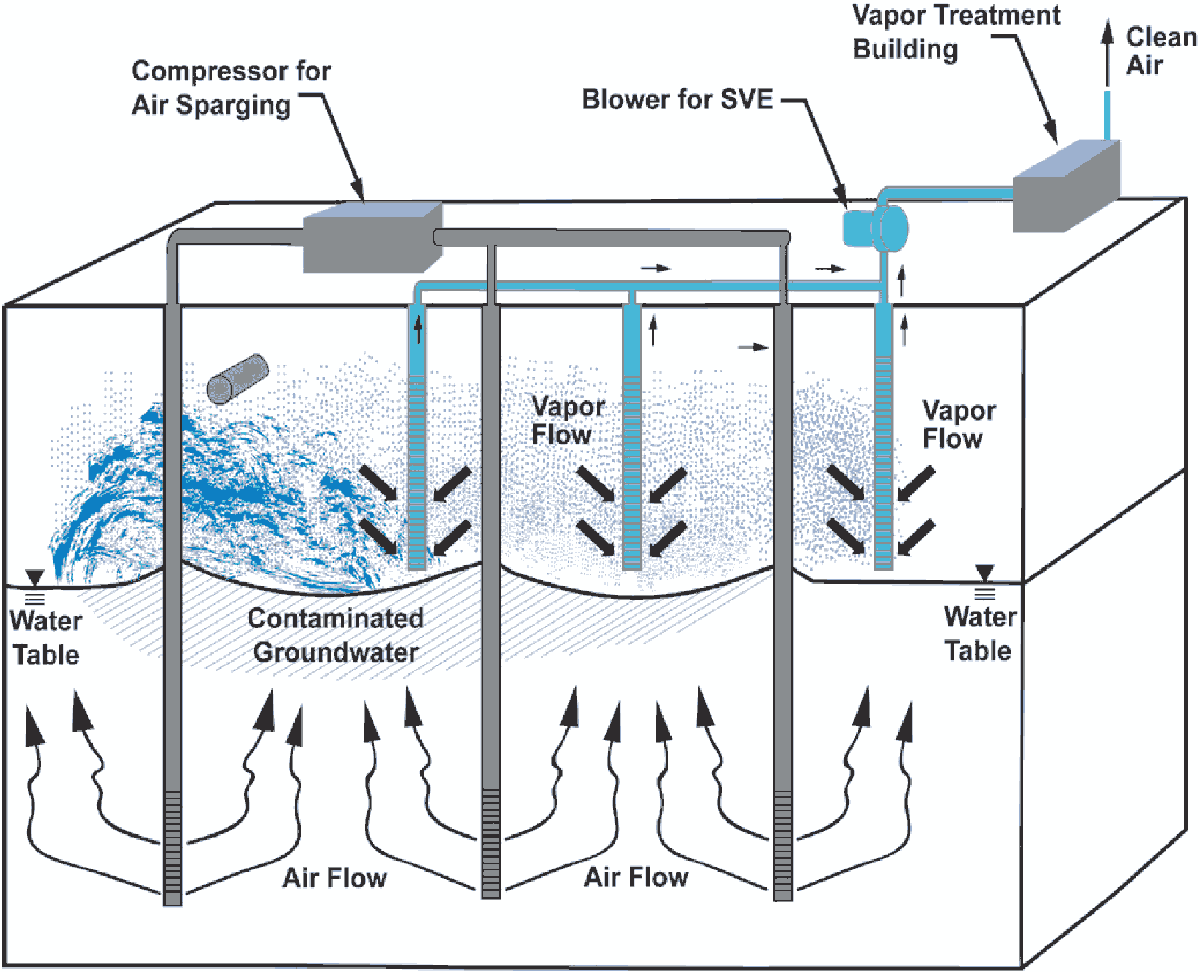
(US Environmental Protection Agency, A Citizen’s Guide to Soil Vapor Extraction and Air Sparging, September 2012)
Dual-Phase Extraction (DPE)
While SVE focuses on soil and soil gas, Dual-Phase Extraction (also known as Multi-Phase Extraction or MPE) targets both soil, soil vapor, and groundwater simultaneously.
- The Main Goal: The primary benefit of DPE is “drawdown.” By pumping out groundwater, we lower the water table to expose the smear zone—the area where contaminants are stuck just at the groundwater’s surface.
- Efficiency: Once this zone is exposed to air, the SVE component can remove the mass much faster than traditional “pump-and-treat” water methods alone.
- Treatment Method: Like with SVE, the extracted air is treated through granular activated carbon or burned off through a catalytic oxidizer and released into the atmosphere. The extracted groundwater is treated through a separate granular activated carbon treatment system, and usually discharged into sanitary sewer through a permit with the local sewer district.
Have a contaminated site to address?
Talk to our experts today to develop a practical, cost-effective remediation strategy using proven SVE technologies.
Contact GeoRestoration, Inc. today for affordable soil vapor extraction (SVE) solutions →
Phone: 408-779-5533 · Email: main@georestoration.com